When the mornings are dark, the weather is grey and daylight feels in short supply, it can be harder to start the day feeling alert and ready. That is one reason daylight lamps UK shoppers often look for become more popular as autumn and winter approach.
A daylight lamp, sometimes called a SAD lamp or light box, is designed to produce bright visible light that simulates daylight. It is different from an ordinary desk lamp, a sunrise alarm or a red-light therapy device. The aim is not to fill a room with cosy lighting; it is to provide a bright-light option that can fit into a morning routine.
This guide explains what daylight lamps are, what to check before buying one and how to use one responsibly as part of a practical routine.
What Is a Daylight Lamp?
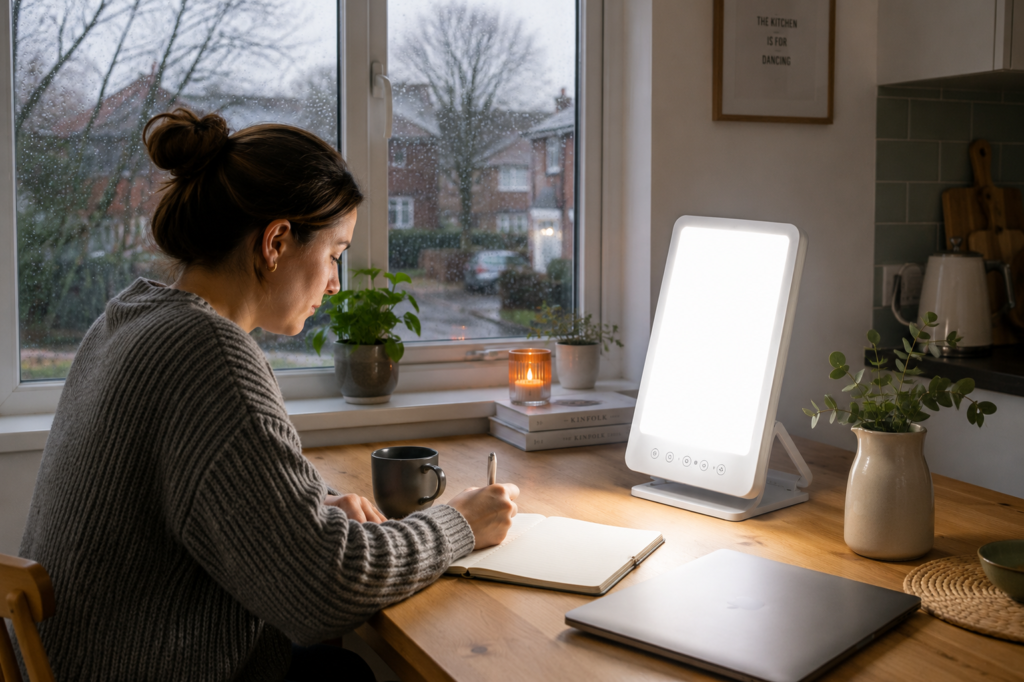
A daylight lamp is a bright-light device designed to simulate daylight indoors. Many people use one in the morning while reading, working, eating breakfast or planning their day.
In the UK, daylight hours become shorter during autumn and winter. For some people, this seasonal change can affect mood, energy, sleep patterns and motivation. Seasonal affective disorder, often called SAD or winter depression, is a type of depression that follows a seasonal pattern. It is important not to self-diagnose: persistent low mood or symptoms that affect daily life should be discussed with a GP or qualified mental-health professional.
The NHS lists light therapy as one possible treatment for SAD. It involves using a bright light, sometimes called a SAD lamp or light box, to simulate daylight in winter. However, the NHS also notes that there is not enough evidence to say how effective it is for everyone, even though many people report that it helps them.
For everyday use, a daylight lamp can be viewed as one possible tool for making a dark-morning routine feel brighter and more structured. It is not a replacement for natural daylight, sleep, exercise, social connection or professional support where that is needed.
Why Daylight Matters During Darker UK Months
Natural light helps signal to the body when it is daytime. During brighter months, it is often easier to get outside early, open the curtains and feel that the day has started. In winter, many people leave home in the dark, work indoors and return after sunset.
That change does not affect everyone in the same way. Some people simply notice that mornings feel slower. Others experience more significant seasonal changes in mood, energy or sleep. If low mood, loss of interest, tiredness or changes in sleep are recurring each winter and affecting daily life, it is worth speaking with a GP rather than relying on a lamp alone.
A daylight lamp is best thought of as part of a wider routine. Going outside during daylight hours, keeping a regular sleep schedule, staying active and maintaining contact with others are also practical steps recommended by the NHS for people managing seasonal changes in mood and wellbeing.
What to Look for When Choosing Daylight Lamps UK Shoppers Can Trust
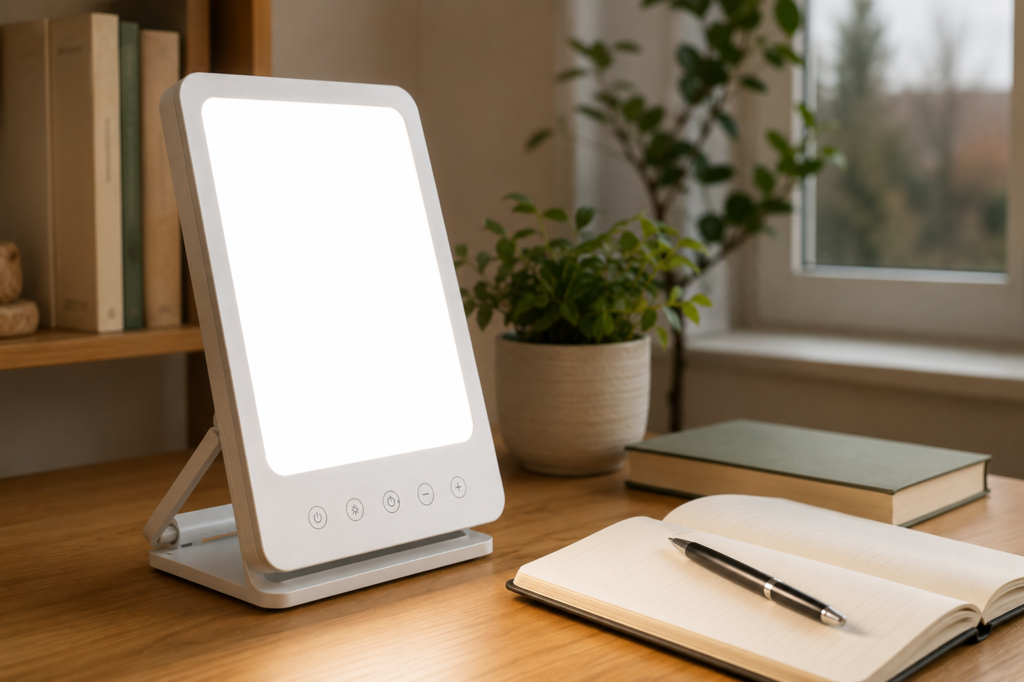
Not every bright desk lamp is a daylight lamp. When comparing products, look for clear specifications rather than relying only on marketing phrases such as “mood light” or “energy lamp.”
Brightness: Look for 10,000 Lux
Lux is a measure of how bright light appears at a given distance. For SAD lamps and light boxes, 10,000 lux is commonly used as the standard figure to look for.
The important detail is the distance at which that figure applies. A lamp may advertise 10,000 lux, but only when you sit very close to it. Check the manufacturer’s guidance to see how far away you should sit and how long a session is intended to last.
Do not assume that brighter is always better. Follow the instructions supplied with the product.
UV-Free Design and Safety Marks
A daylight lamp should clearly state that it is UV-free. This is important because a daylight lamp is not meant to expose you to ultraviolet light.
For UK buyers, check that the product has an appropriate UKCA or CE mark, clear safety information and a UK plug. Buy from a seller that provides a warranty, returns policy and manufacturer instructions in English.
Size, Shape and Where You Will Use It
A daylight lamp only becomes useful if it fits into your routine. Before buying, think about where it will live.
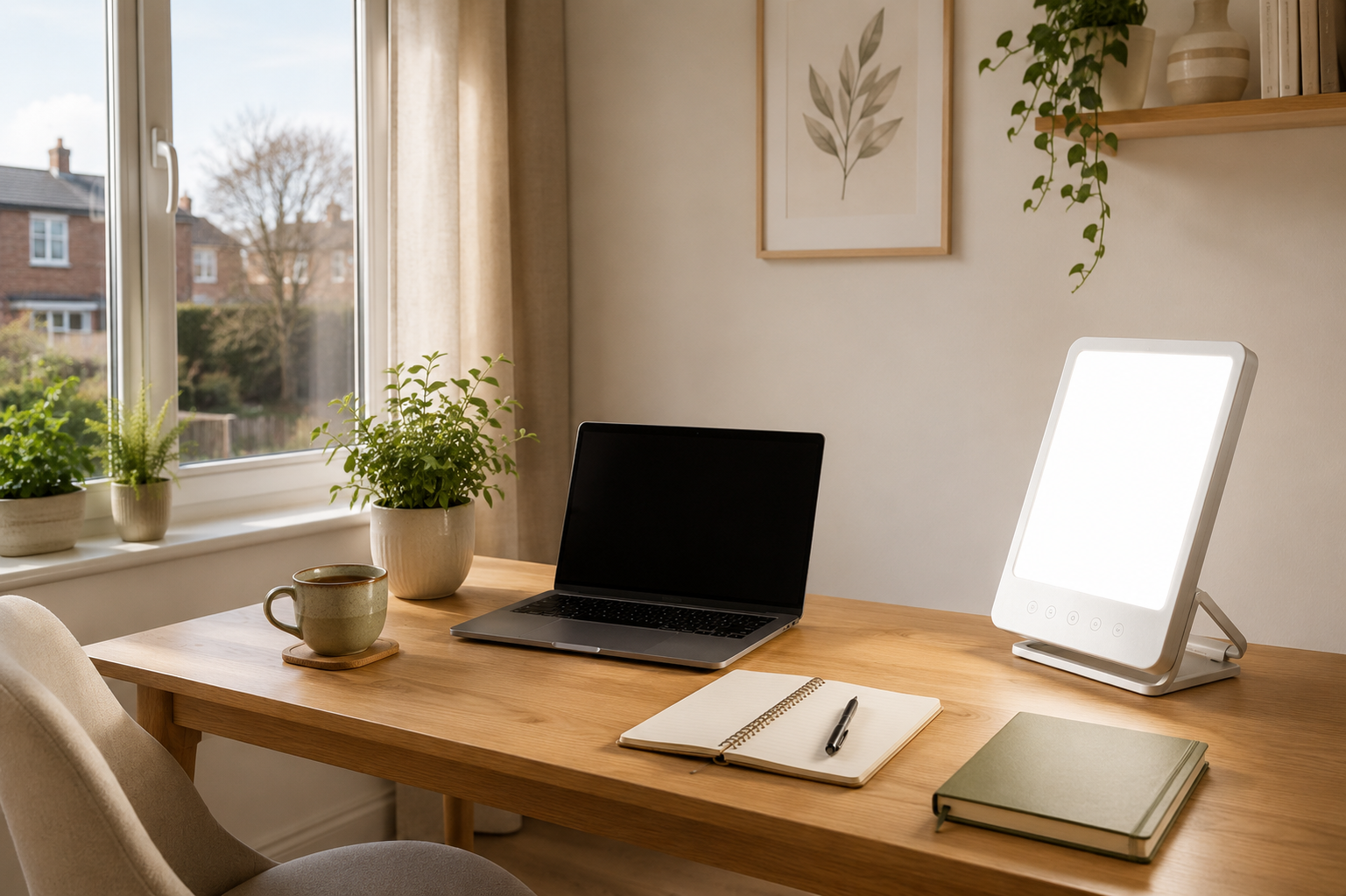
A compact lamp may suit a desk, kitchen table or bedside cabinet. A larger light box may be better if you have a fixed workspace and want a wider spread of light. Some designs include adjustable stands, timers, brightness settings or a tilt function.
Ask practical questions:
- Can it sit safely on the surface you plan to use?
- Is the cable long enough?
- Will you realistically use it while having breakfast, reading or working?
- Does it have a timer if you prefer a set routine?
- Is it easy to store when you do not need it?
The best daylight lamp is usually the one you can use consistently without rearranging your whole morning.
How to Use a Daylight Lamp as Part of a Morning Routine
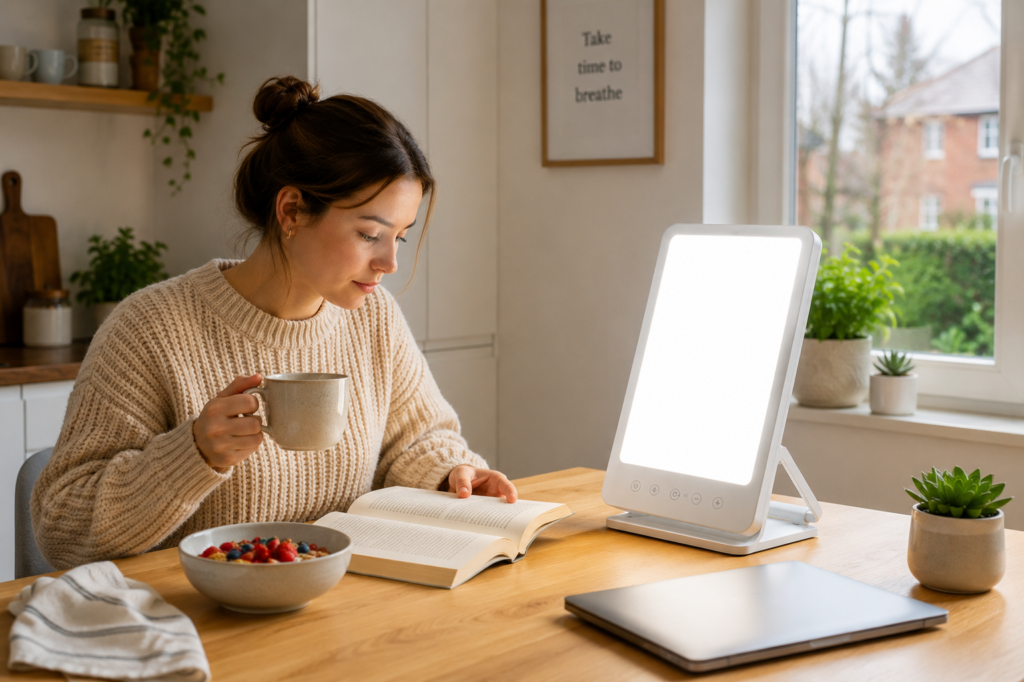
Always follow the manufacturer’s instructions first, because recommended distance and session length vary between devices.
In general, people often place a daylight lamp on a desk or table and use it while doing another quiet morning activity. You do not need to stare directly at the light. The lamp is usually positioned nearby, angled toward you, while you read, work, eat breakfast or plan the day.
A simple routine could look like this:
- Open the curtains as soon as you wake up.
- Drink water, have breakfast or write your to-do list near the lamp.
- Use the lamp for the time recommended in its instructions.
- If possible, get outside for a short walk or daylight break later in the day.
- Keep your wake-up and bedtime reasonably consistent.
Avoid using a daylight lamp late in the evening unless the manufacturer or a healthcare professional has advised otherwise. Bright light at the wrong time may interfere with your usual sleep pattern.
Who Should Speak to a Healthcare Professional Before Using One?
Daylight lamps are not suitable for everyone. The NHS advises speaking to a GP before trying light therapy if you have certain eye conditions or take medicines that can increase sensitivity to light.
It is sensible to seek advice before using a daylight lamp if you:
- have an eye condition or a history of eye disease;
- take medication that can make you more sensitive to light;
- have been diagnosed with bipolar disorder or have experienced periods of mania or hypomania;
- are receiving treatment for a mental-health condition;
- have persistent low mood, sleep problems or fatigue that are affecting daily life.
A daylight lamp should not be used as a substitute for professional assessment. If you feel unsafe, have thoughts of harming yourself or need urgent mental-health support, contact NHS 111, your local crisis service, or 999 in an emergency.
Daylight Lamp vs Sunrise Alarm Clock
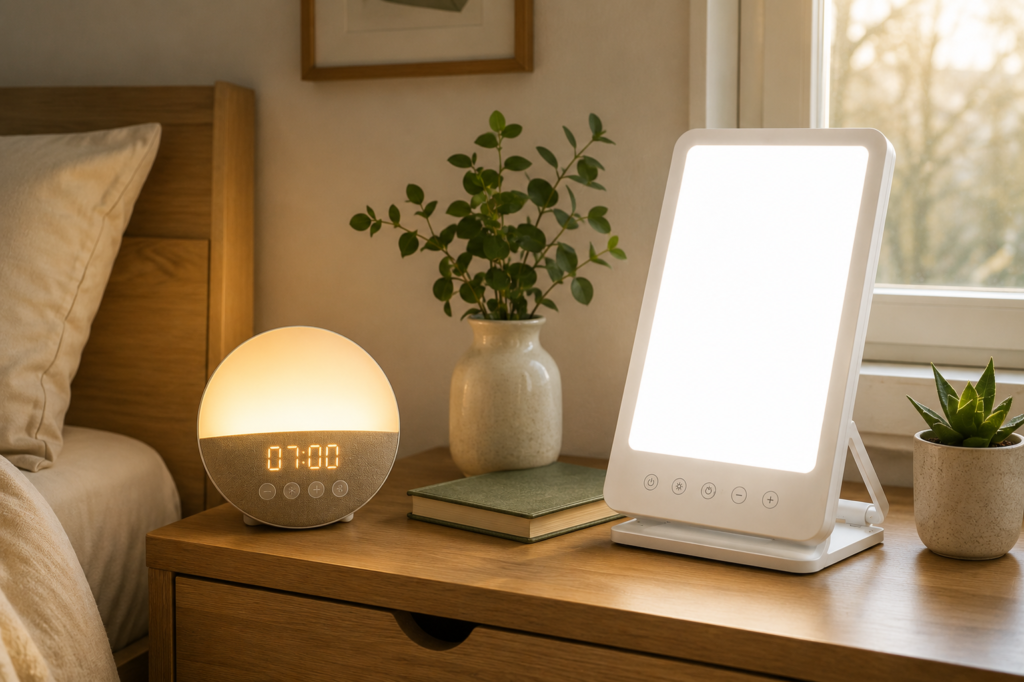
A daylight lamp and a sunrise alarm clock can both support a more intentional morning routine, but they work differently.
A daylight lamp is a bright-light device used while you are awake. It is designed to simulate daylight at a set brightness and is often used at a desk or table.
A sunrise alarm clock gradually increases light before your chosen wake-up time. It is designed to make waking feel more gradual, but it may not provide the same brightness level as a dedicated daylight lamp.
If your main goal is to make dark mornings feel less abrupt, a sunrise alarm may appeal. If you want a bright-light device to use while you are awake and beginning your day, a daylight lamp may be the more relevant option.
Frequently Asked Questions
Are daylight lamps the same as SAD lamps?
Often, yes. The terms daylight lamp, SAD lamp and light box are commonly used for bright-light devices designed to simulate daylight. Always check the product specifications rather than relying on the name alone.
What should I look for in a daylight lamp?
Look for 10,000 lux at a practical distance, UV-free design, UKCA or CE marking, clear instructions, a suitable size, a UK plug, warranty and returns policy.
Can a daylight lamp treat depression?
Do not rely on a daylight lamp as a treatment for depression. Light therapy is one option that may be considered for seasonal affective disorder, but persistent low mood or symptoms affecting daily life should be discussed with a GP or qualified professional.
Do I need to look directly at the lamp?
No. Follow the manufacturer’s instructions. Daylight lamps are generally used nearby while you complete another morning activity; you should not stare directly into the light.
Can I use a daylight lamp at night?
It is usually better to use bright light earlier in the day. Using a daylight lamp late in the evening may affect sleep for some people. Follow the product instructions and seek advice if you are unsure.
Final Thoughts
Daylight lamps UK shoppers choose can be a practical addition to a darker-morning routine, but they work best when expectations are realistic.
Choose a UV-free lamp with clear safety information, check the brightness and recommended distance, and make sure it is easy to use in your everyday space. Most importantly, treat it as one part of a wider approach to wellbeing: natural daylight, movement, regular sleep, connection and professional support all matter too.
If seasonal changes in mood or energy are affecting your daily life, speak to a GP. A lamp may be one tool to consider, but you do not have to manage ongoing symptoms alone.

David Igbinidu is the founder of DTDF Wellness and a Registered Mental Health Nurse based in the UK. He writes about fitness, nutrition, mental wellbeing, sleep and wellness technology, with a focus on practical information that helps readers make informed decisions and build healthier everyday habits.