Starting a yoga or home fitness journey is exciting, but choosing the best yoga mat for beginners can feel overwhelming. With so many options available, it can be difficult to know which mat offers the right balance of comfort, grip, durability and value for money. Whether you’re planning to practise yoga, stretching, Pilates or bodyweight workouts, the right mat provides a stable and comfortable foundation while helping reduce pressure on your joints.
In this comprehensive UK buying guide, you’ll learn what features matter most, how to avoid common mistakes and how to select a mat that suits your goals and budget.
Why Choosing the Best Yoga Mat for Beginners Matters
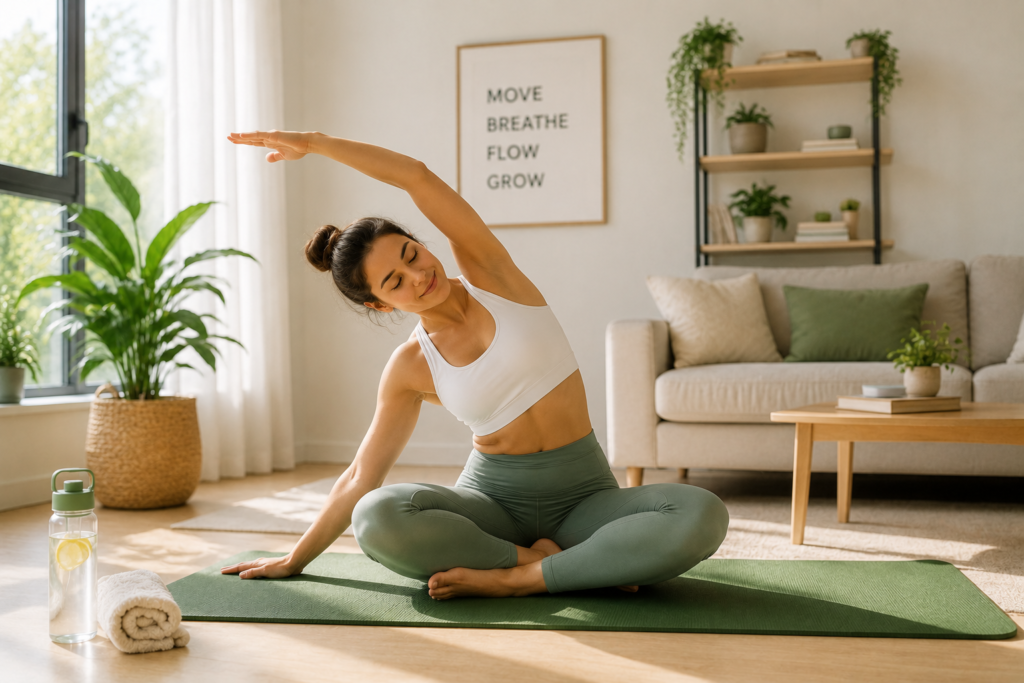
Your yoga mat is more than just a piece of exercise equipment. It creates a dedicated workout space, supports your balance and helps improve your confidence while learning new movements.
The best yoga mat for beginners should provide:
- Excellent grip
- Comfortable cushioning
- Long-lasting durability
- Easy cleaning
- Good value for money
A quality mat also encourages consistency. When your equipment feels comfortable and reliable, you’re more likely to stick to your exercise routine.
Research also shows that regular physical activity contributes to improved physical and mental wellbeing. The NHS recommends adults aim for at least 150 minutes of moderate-intensity activity each week.
What to Look for in the Best Yoga Mat for Beginners
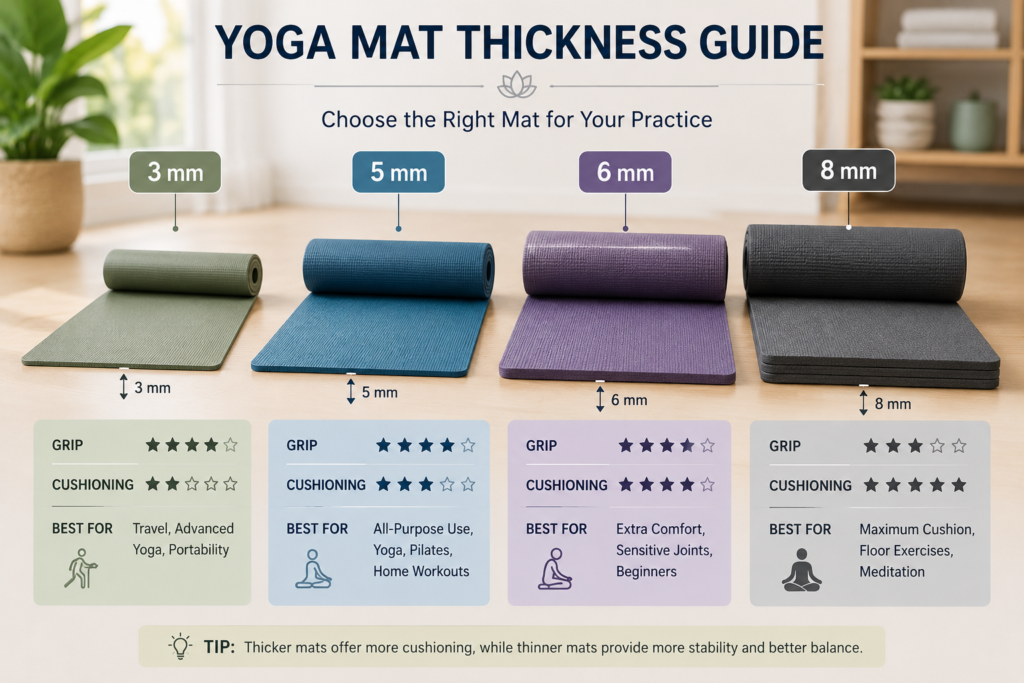
Before buying a beginner yoga mat, consider these important features.
Thicknes
Thickness affects comfort and stability.
Generally:
- 4–5 mm offers a balanced option for most beginners.
- 6 mm provides extra cushioning for sensitive knees.
- Thin travel mats (2–3 mm) are lightweight but less comfortable.
Most beginners find that a 5 mm mat offers the ideal combination of comfort and balance.
Grip and Surface Texture
Grip is one of the most important features of the best yoga mat for beginners.
A textured surface reduces slipping during movements such as:
- Downward Dog
- Plank
- Lunges
- Mountain Pose
Better grip helps improve confidence while reducing the risk of injury.
Materials Used in the Best Yoga Mat for Beginners
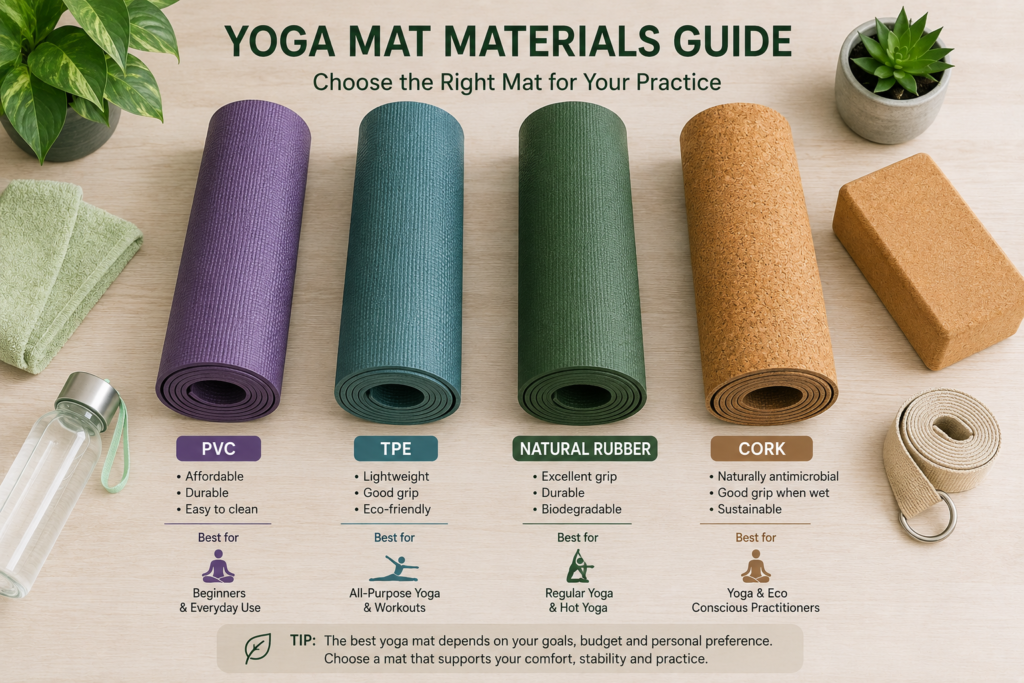
Yoga mats come in several different materials, each offering different benefits.
PVC Yoga Mats
Advantages:
- Affordable
- Durable
- Easy to clean
Disadvantages:
- Less environmentally friendly
These are often recommended for complete beginners looking for a budget-friendly option.
Natural Rubber and TPE Mats
Natural rubber and TPE (Thermoplastic Elastomer) mats have become increasingly popular.
Benefits include:
- Better grip
- Eco-friendlier materials
- Comfortable cushioning
- Lightweight design
Many people looking for an entry-level yoga mat or beginner exercise mat prefer TPE because it combines comfort with durability.
Choosing the Right Size
Most standard yoga mats measure approximately:
- Length: 173–183 cm
- Width: 61 cm
If you’re taller than 6 feet, consider an extra-long mat for added comfort during stretching and floor exercises.
A wider mat also provides more room for Pilates and bodyweight workouts.
How Much Should Beginners Spend?
Fortunately, you don’t need to spend hundreds of pounds.
Typical UK price ranges include:
| Price | Quality |
|---|---|
| Under £20 | Basic beginner mats |
| £20–£40 | Best value |
| £40–£70 | Premium quality |
| £70+ | Professional yoga mats |
Most people can find the best yoga mat for beginners within the £20–£40 range.
Common Mistakes When Buying Your First Yoga Mat
Avoid these common mistakes:
Buying the Cheapest Option
Very cheap mats often:
- Wear out quickly
- Become slippery
- Lose cushioning
- Curl at the edges
Spending slightly more often provides much better value over time.
Ignoring Thickness
Many beginners assume thicker always means better.
However, extremely thick mats can reduce stability during standing poses.
Finding the right balance is more important than simply choosing the thickest option.
Yoga Mat Features Worth Paying For
Some premium features genuinely improve your experience.
Look for:
- Non-slip surface
- Closed-cell material (absorbs less sweat)
- Easy-clean finish
- Lightweight construction
- Carry strap
- Eco-friendly materials
These features make your mat easier to maintain and more enjoyable to use.
Caring for Your Yoga Mat
Cleaning your mat regularly helps extend its lifespan.
Simple maintenance includes:
- Wiping after workouts
- Allowing it to air dry completely
- Storing away from direct sunlight
- Rolling rather than folding
Proper care keeps your mat hygienic and preserves its grip.
Is a Yoga Mat Only for Yoga?
Absolutely not.
The best yoga mat for beginners is suitable for:
- Stretching
- Pilates
- Meditation
- Core workouts
- Bodyweight training
- Mobility exercises
- Home fitness routines
Many people use the same mat daily for a variety of wellness activities.
Frequently Asked Questions
What thickness is best for beginners?
Most beginners benefit from a 5 mm yoga mat because it offers a good balance between comfort and stability.
Can I use a yoga mat every day?
Yes. Daily use is perfectly safe, provided you clean and maintain your mat regularly.
Are expensive yoga mats worth it?
Premium mats often provide better grip and durability, but many affordable mats offer excellent value for beginners.
Final Thoughts
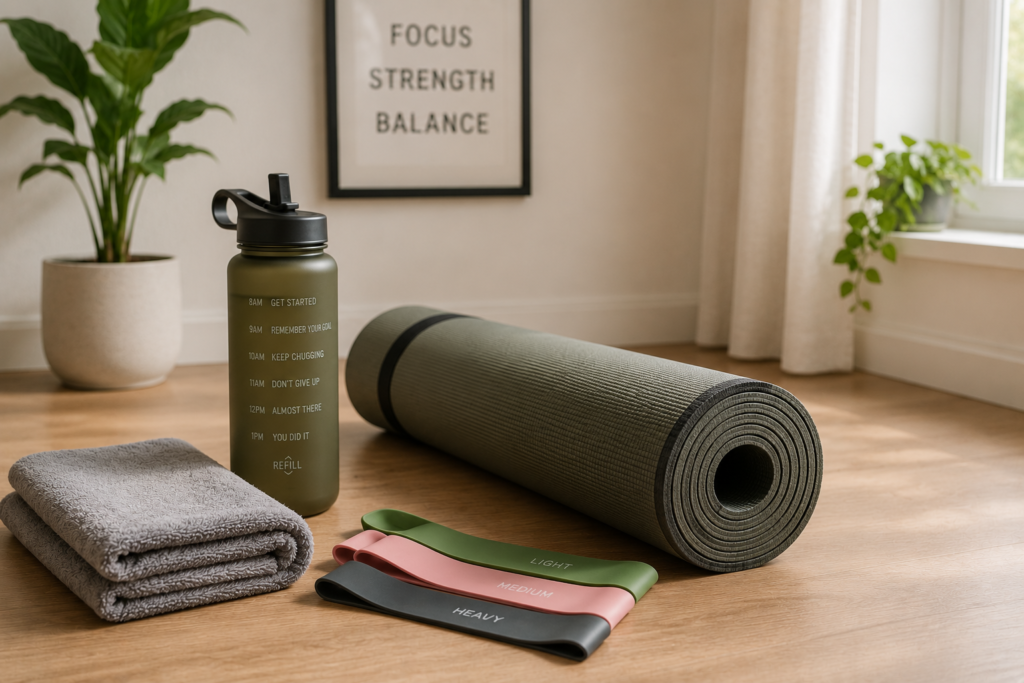
Finding the best yoga mat for beginners doesn’t have to be complicated. Focus on choosing a mat with good grip, comfortable cushioning, durable materials and the right size for your needs. A quality yoga mat supports not only yoga practice but also stretching, meditation and home workouts, making it one of the most versatile pieces of wellness equipment you can own.
By investing in a mat that suits your goals, you’ll create a comfortable space that encourages consistency and helps build healthy habits over time.

David Igbinidu is the founder of DTDF Wellness and a Registered Mental Health Nurse based in the UK. He writes about fitness, nutrition, mental wellbeing, sleep and wellness technology, with a focus on practical information that helps readers make informed decisions and build healthier everyday habits.