
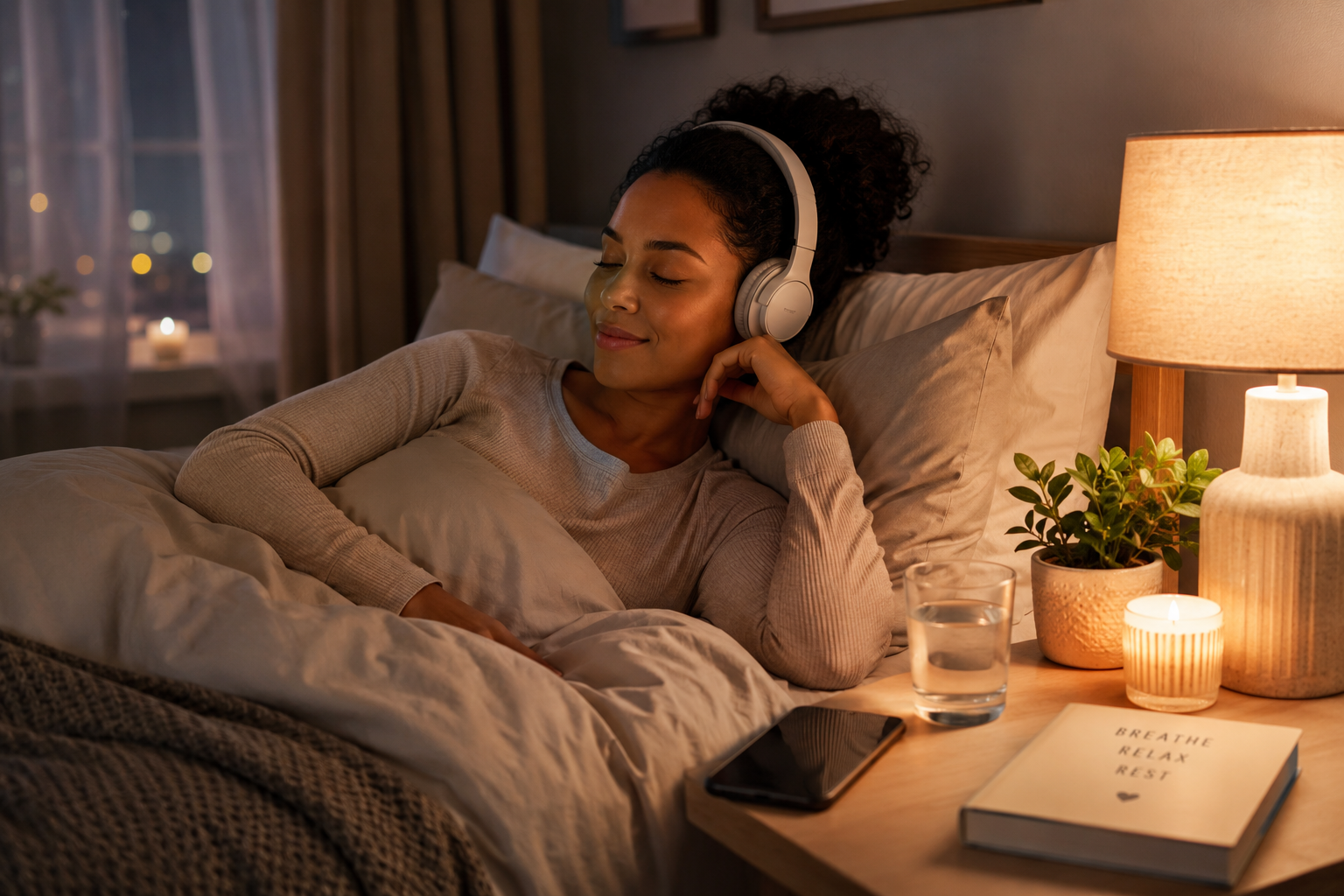
Audiobooks for sleep are becoming an appealing option for people who want a calmer way to wind down at the end of the day. Instead of spending the last part of the evening scrolling through social media, watching television or staring at a phone screen, listening to a story allows you to put the screen aside and simply listen.
That doesn’t mean an audiobook is a treatment for insomnia. However, listening to something calming can fit naturally into a healthy bedtime routine.
The NHS recommends creating a regular sleep routine, setting aside time to relax before bed and reducing the use of phones, tablets and computers before bedtime. NHS Every Mind Matters specifically includes listening to calming music or a podcast among activities people can try while winding down.
So, could an audiobook serve a similar purpose?
Let’s look at how listening before bed can fit into a relaxing evening routine and how to choose something suitable.
Why Listen to Audiobooks Before Bed?
For many people, the period immediately before bed is still filled with stimulation.
You may finish work, check messages, watch television, browse social media and then take your phone to bed. Your body may be tired while your mind is still occupied.
A bedtime routine creates a transition between the activity of the day and sleep.
NHS guidance recommends having a regular routine and relaxing for at least an hour before bed. It also advises avoiding smartphones and other devices immediately before sleeping because screen exposure can make you feel more awake.
An audiobook offers a different experience.
Once you’ve selected what you want to hear, you can put the phone down, switch off the screen and concentrate on the narration.
Audiobooks Can Help Reduce Evening Screen Time
One of the simplest reasons to consider listening to audiobooks before bed is that you don’t need to continuously look at a screen.
You might still use a phone or tablet to play the audiobook, but after pressing play, the screen can be turned off.
That makes audio different from scrolling through social media, reading websites or watching videos.
NHS Every Mind Matters recommends avoiding electronic devices for at least an hour before bed and suggests activities such as reading, meditation, calming music and podcasts as alternatives.
An audiobook can therefore be another practical form of screen-free listening.
Listening Can Become Part of a Bedtime Routine
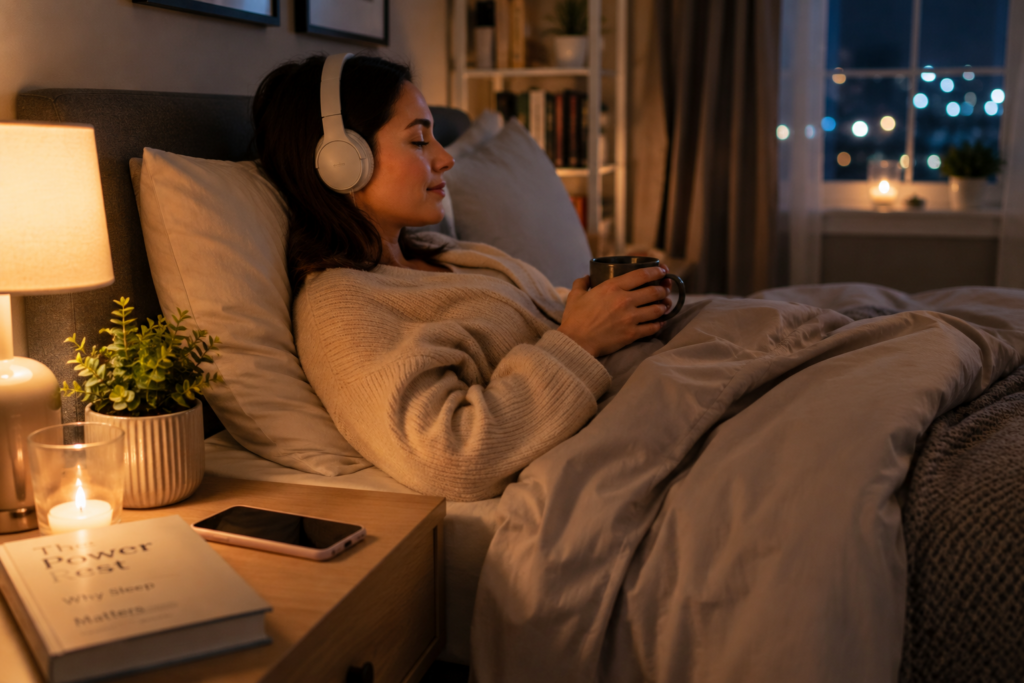
Your audiobook doesn’t have to be something you listen to only after getting into bed.
It could become part of the entire wind-down period.
For example, you could listen while:
- preparing clothes for the following day,
- tidying the kitchen,
- having a bath,
- completing a simple skincare routine, or
- relaxing in a comfortable chair before going to bed.
The idea is to create a predictable period where the pace of the evening gradually slows.
NHS guidance says that maintaining consistent sleep and wake times and establishing a relaxing bedtime routine can support better sleep habits.
Can Audiobooks Help You Sleep?
This question needs a careful answer.
There isn’t good reason to claim that simply listening to an audiobook will treat insomnia or guarantee better sleep.
What we can say is that relaxation and a consistent bedtime routine are recognised parts of good sleep hygiene, and NHS guidance specifically includes quiet listening activities such as calming music and podcasts among possible ways to wind down.
Therefore, the potential value of audiobooks for sleep may be less about the audiobook itself and more about how you use it.
If listening replaces stimulating late-night screen use and becomes part of a calm, consistent bedtime routine, it may be a useful habit for some people.
But your choice of audiobook matters too.
What Are the Best Audiobooks for Sleep and Relaxation?
There probably isn’t one “best” audiobook for everyone.
A story that one person finds peaceful might keep someone else awake because they desperately want to know what happens next.
When choosing bedtime audiobooks, consider the type of content and how it affects you personally.
Calm Fiction and Familiar Stories
A gentle story can give your mind something to follow without requiring much effort.
Some people may particularly enjoy listening to a book they already know.
Familiarity can also remove some of the temptation to stay awake just to discover what happens next.
If you’re choosing fiction specifically for bedtime, consider whether suspenseful thrillers, horror or highly dramatic stories make you more alert rather than relaxed.
If they do, save them for daytime listening.
Biographies and Memoirs
Biographies and memoirs can also work well for people who prefer factual storytelling.
A good narrator can make someone’s life story engaging without requiring you to sit down and read.
Again, personal preference matters.
The objective isn’t to find an audiobook that supposedly “makes you sleep.” It’s to find something you genuinely enjoy listening to as your day winds down.
Mindfulness and Personal Development Audiobooks
Some listeners may prefer personal development, mindfulness or relaxation-related audiobooks.
These can work particularly well when you’re interested in learning but don’t want to spend another hour looking at a screen.
However, be selective.
A highly motivational business book that gets you thinking about tomorrow’s projects may not be the best choice immediately before bed.
For evening listening, calmer material may be preferable.
How to Create an Audiobook Bedtime Routine
You don’t need to transform your entire evening.
Start with something simple.
Choose a regular point when your wind-down period begins. Lower the lights, finish anything that genuinely needs doing and reduce unnecessary phone use.
Then choose an audiobook and listen for perhaps 20 or 30 minutes.
You could also use a sleep timer if your audiobook app provides one. That prevents the book from continuing for hours if you fall asleep.
Keep the volume comfortable rather than loud, and choose content you find relaxing rather than stimulating.
The broader routine matters as well.
NHS guidance recommends keeping the bedroom dark and quiet, maintaining regular sleeping hours, relaxing before bed and limiting things that can interfere with sleep, including caffeine and alcohol close to bedtime.
In other words, an audiobook should complement healthy sleep habits rather than replace them.
Where Can You Listen to Audiobooks?
There are several ways to listen to audiobooks.
Depending on the titles you’re interested in, you may be able to access them through libraries, purchase individual audiobooks or use an audiobook subscription service.
One well-known option is Audible.
Listening to Audiobooks With Audible
Audible is Amazon’s audiobook membership service and provides access to audiobooks as well as podcasts, Audible Originals and other audio content. Amazon’s UK Associates information states that Audible can be used through its app on iOS and Android as well as compatible Alexa-enabled devices, Fire tablets, Kindle and other supported devices.
This makes it one option for someone who wants to experiment with adding audiobooks to an evening routine.
Rather than recommending a particular title to everyone, you can explore the available categories and find something that suits your interests and preferred listening style.
Explore Audible Audiobooks
If you’d like to see whether audiobooks could become part of your evening routine, you can explore the current Audible membership options on Amazon.
Affiliate disclosure: As an Amazon Associate, DTDF Wellness earns from qualifying purchases. If you use our affiliate link, we may receive a commission or bounty at no additional cost to you.
Don’t Choose an Audiobook That Keeps You Awake
There’s an interesting problem with bedtime audiobooks: sometimes the book is simply too good.
You’ve probably experienced the equivalent with television — one episode becomes three because you want to know what happens next.
An audiobook can have the same effect.
If you’re regularly telling yourself “just one more chapter”, consider using something less suspenseful for bedtime and saving your favourite thriller for another part of the day.
A sleep timer can also help create a stopping point.
The goal isn’t to finish the book.
It’s to create an enjoyable wind-down routine.
Audiobooks for Sleep Should Be Part of a Bigger Routine
It would be easy to think that finding the perfect audiobook is the answer to poor sleep.
Sleep is more complicated than that.
Your bedroom environment, routine, stress levels, caffeine, alcohol, exercise and other factors can all influence sleep.
For example, NHS guidance recommends maintaining regular sleeping hours, creating time to relax before bed and making the bedroom comfortable, dark and quiet. It also advises avoiding caffeine, alcohol and nicotine before bedtime.
UCLH similarly advises establishing a bedtime routine and notes that alcohol may initially make falling asleep easier but can contribute to disrupted sleep later in the night.
Think of an audiobook as one small component of the routine, rather than the entire solution.
When Sleep Problems Need More Than a Bedtime Routine
Occasional difficulty sleeping is common, but persistent sleep problems deserve more attention.
The NHS describes insomnia as regularly having problems falling asleep or staying asleep. Long-term insomnia refers to insomnia lasting three months or longer.
You should not rely on audiobooks, supplements or other lifestyle ideas as substitutes for appropriate healthcare.
The NHS advises speaking to a GP if changing your sleeping habits hasn’t helped, you’ve had trouble sleeping for months, or insomnia is affecting your daily life in a way that makes coping difficult.
That distinction is particularly important for DTDF Wellness: we’re discussing a practical wellness routine, not presenting Audible or audiobooks as medical treatments.
Final Thoughts on Audiobooks for Sleep
Audiobooks for sleep don’t need to be complicated.
For some people, listening to a relaxing story may simply provide an enjoyable way to move away from screens and transition from a busy day into a quieter evening.
Choose something you genuinely enjoy, keep the volume comfortable and consider setting a timer so your audiobook doesn’t continue throughout the night.
Most importantly, look at the bigger picture.
A consistent bedtime, reduced evening screen use, a comfortable sleeping environment and enough time to unwind all form part of healthy sleep habits.
An audiobook can simply become one enjoyable part of that routine.
And if you discover that listening to stories helps you put down the screen, slow down and enjoy the final part of your evening, it may be a habit worth keeping.

David Igbinidu is the founder of DTDF Wellness and a Registered Mental Health Nurse based in the UK. He writes about fitness, nutrition, mental wellbeing, sleep and wellness technology, with a focus on practical information that helps readers make informed decisions and build healthier everyday habits.